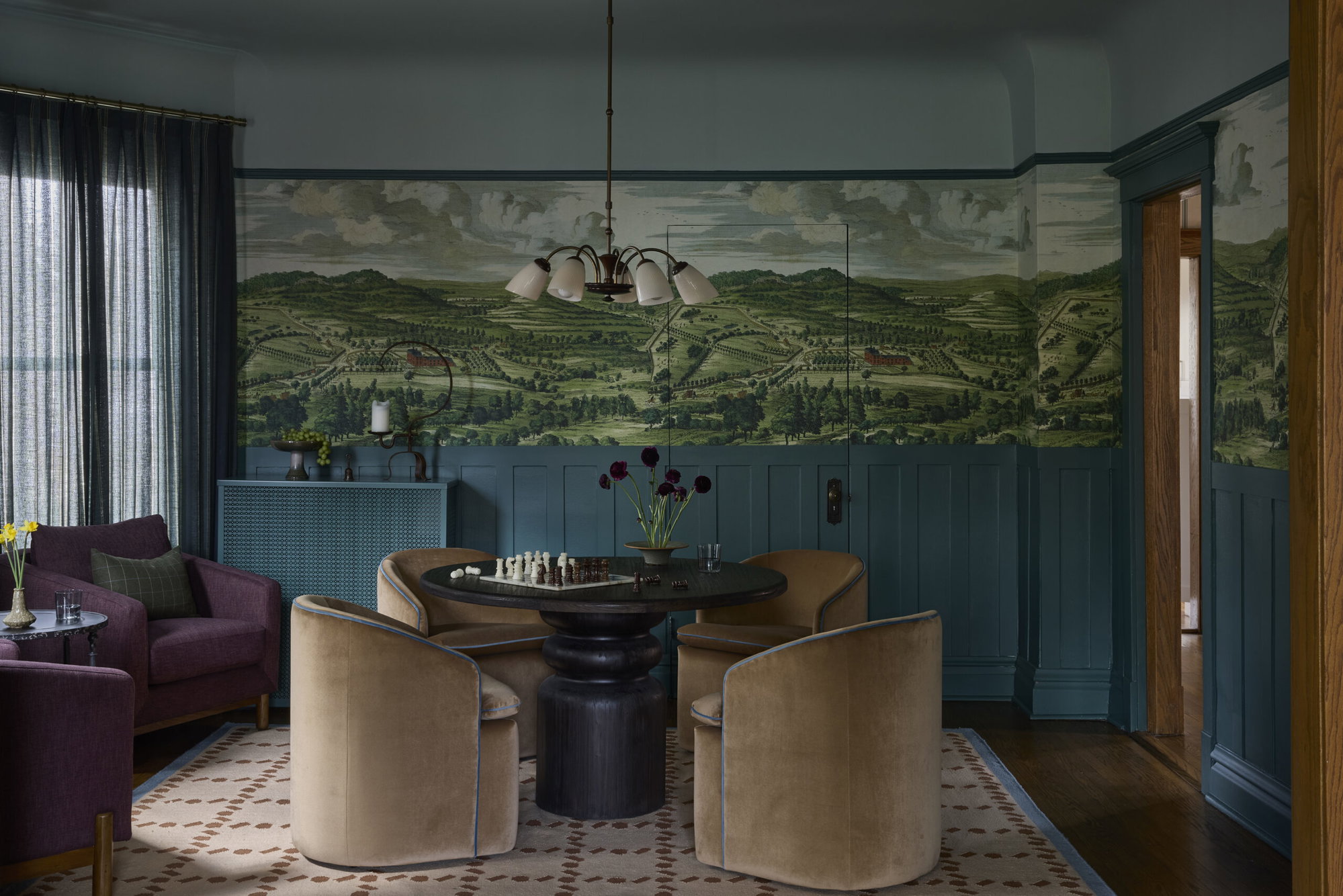
Photography: Heather Talbert Photography || Styling: Brandi Devers Russow and Sami Wiley of À la Carte Studios
There is a reverence for historic homes that is shared by many designers and homeowners alike. For Abigail Morris, owner of Chicago-based Abigail Morris Interiors, the houses from bygone eras have long captured her attention, starting in childhood visiting family in Indianapolis’ old Tudors and now living in an 1887 row home in the Windy City.
“I have always loved the character [of historic homes] … the squeak in the woods as you walk down the stairs, the things that patina over time,” she says.
Morris has carved a niche for herself in the Midwest, where her full-service interior design studio specializes in revitalizing historic homes, and she has learned a thing or two along the way. “Historic homes are a labor of love,” she says, but adds that by marrying passion and practicality, they can be transformed into something enduring and special.
Drawing from one of her most recent projects, dubbed “The Winchester,” an early 1900s Craftsman home in Chicago, Morris shares top considerations homeowners should keep in mind when embarking on the remodel of an old home.
Preserve What Makes the Home Special


Morris recommends that if you’re looking for a historic home to call your own, try and find one that preserves as much of the original character as possible. Then, when the work begins on the remodel, those unique elements can be guiding lights. “There are a couple of inputs that are super important when designing a historic home,” she says. “No. 1 is listening to the architecture of the home.”
When embarking on The Winchester project, Morris says that the home was particularly special because much of its original wood window casings and staircase had never been painted, and the homeowners also loved the entry’s stained-glass window and original entry tile. The Winchester has Craftsman bones—an architectural movement in America in the late 19th and early 20th centuries that emphasizes woodwork and natural materials—so the team preserved these original features and added color and personality with furnishings and wallpaper.
[Related: 5 Ways to Bring Vintage Style into Your Home]
Budget for the Unexpected
Historic homes are packed with charm, but surprises are often hidden in the walls—and not all are the most pleasant ones. Morris recommends budgeting for the unexpected and often advises clients to save at least 10% of the construction budget for additional work that might arise during a historic home remodel.
In The Winchester, the project team discovered the home still had cloth wiring, a fire hazard, and the owners had to replace all of the wiring to get the house up to code. While it wasn’t part of the project’s original scope, it’s an example of an extra expense that is necessary for the longevity of the home.
Make the Home Work for Your Lifestyle


Older homes were built with different owners and lifestyles in mind, and their layouts often need thoughtful reworking. The owners of The Winchester have two young children and needed the home to be highly functional for family life. In its original state, the primary room was on the third floor of the home, and the owners wanted to relocate it to the same level as their kids’ rooms on the second floor. Morris—along with building partner Tercon Builders—converted an office on the second floor into a primary suite, adding a bathroom, and also maximized storage by removing a closet and inserting a built-in wardrobe in its place.
Thoughtful gathering moments were reimagined throughout the home, too, emphasizing togetherness. A pantry area near the kitchen was converted into a multipurpose space: a mini mudroom and landing space for the kids to store items, eat meals, or do homework. A drawing room and music room—both designed for unwinding and recreation, and notably without TVs—offer spaces for playing the piano, entertaining, and playing games.
Add Personality With Color and Furnishings


While a home’s architecture helps establish a sense of place, details like wallpaper, furnishings, and lighting can help express personality. The homeowners of The Winchester love color and wanted the interior design to feature plenty of it and exude playfulness.
Upholstered chairs, ottomans, and sofas bring color and texture to gathering spaces; vibrant and artful wallpaper bring personality to rooms as large as the dining room or music room and as small as the powder room; and vintage lighting and furnishings add character and complement the home’s historic roots.
And Morris doesn’t think you always have to play by the rules of design when it comes to furnishings. “I always think that the most interesting designs have tension,” she says. “Maybe you have a midcentury modern piece with something more traditional or vintage.”
The Winchester’s New Chapter
The work on The Winchester continues. Morris and her clients have moved onto the next phase of the project, which includes updating the exterior and tackling other rooms in the house like the kids’ bathroom, laundry room, and kitchen. It’s a project that shows how a home’s past can be honored while planning for the present and future, thanks to patience, hard work, and a passion for craftsmanship.
Read this next: This Historic Kitchen Exudes Elegance
|
|
|